
PRP hair loss research evidence
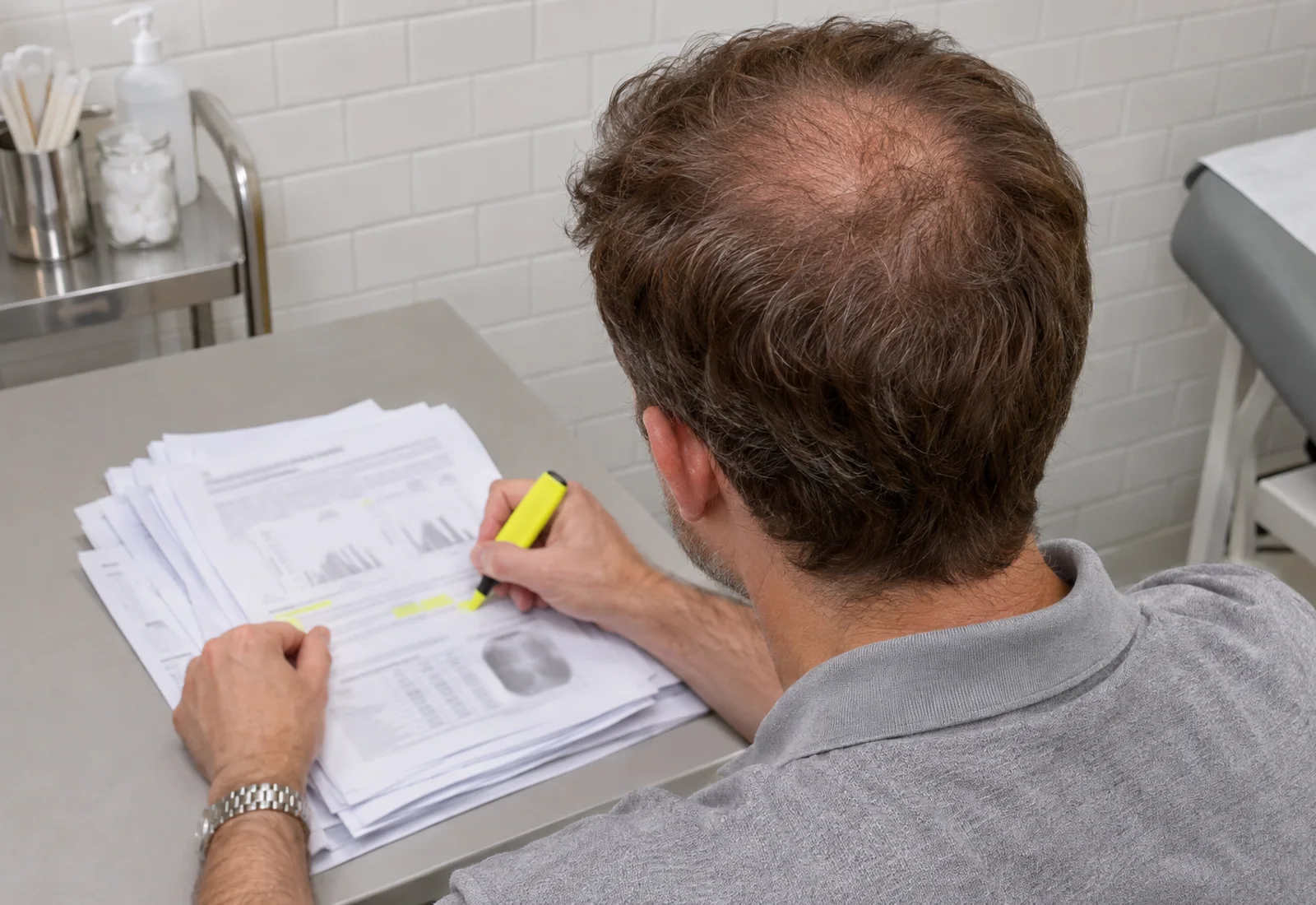
Before paying for PRP on thinning hair, price the evidence as well as the sessions. A treatment can cost the same whether the research behind it is strong or thin, so the strength of the proof is a cost line worth reading first.
What the research says so far
A review published through PMC reports that highly heterogeneous studies with publication bias suggest PRP effectively increases hair density in androgenetic alopecia, so further high-quality randomized clinical trials are recommended to strengthen the evidence. Read the two warnings in that sentence, mixed study designs and publication bias, as limits on how far the finding stretches.
The same PMC source states that despite the increase in research and use of PRP for androgenetic alopecia, there is currently no consensus based on substantial evidence from randomized clinical trials. Healthline reaches a similar place in plainer words: the science isn't 100 percent conclusive that PRP can help regrow your hair or preserve the hair that you have.
The four evidence questions
Each question below checks one piece of the research from a different angle.
- Does PRP improve hair density in women? looks at density as the result that gets measured.
- Do randomized trials support PRP for female hair loss? asks whether the strongest trial design backs the claim.
- What did a meta-analysis find about PRP safety? covers the risk side.
- Does PRP increase overall hair count? separates a count of hairs from a density figure.
For outside reading, Healthline's guide to PRP for hair loss weighs efficacy, safety and cost. MedlinePlus's hair loss page gives general background, and Cleveland Clinic's PRP therapy page describes the procedure itself.
The total to have itemized
Ask the provider to itemize every PRP session you would need, the visits that follow and the point at which you and the provider agree to stop if results are not showing. That total is what you are buying on evidence that sources describe as unsettled.