
PRP hair restoration basics
PRP for hair runs on a schedule of visits, so the first thing to learn is how many visits the treatment plan holds. A single session price tells you little until you know the schedule it belongs to.
The treatment, step by step
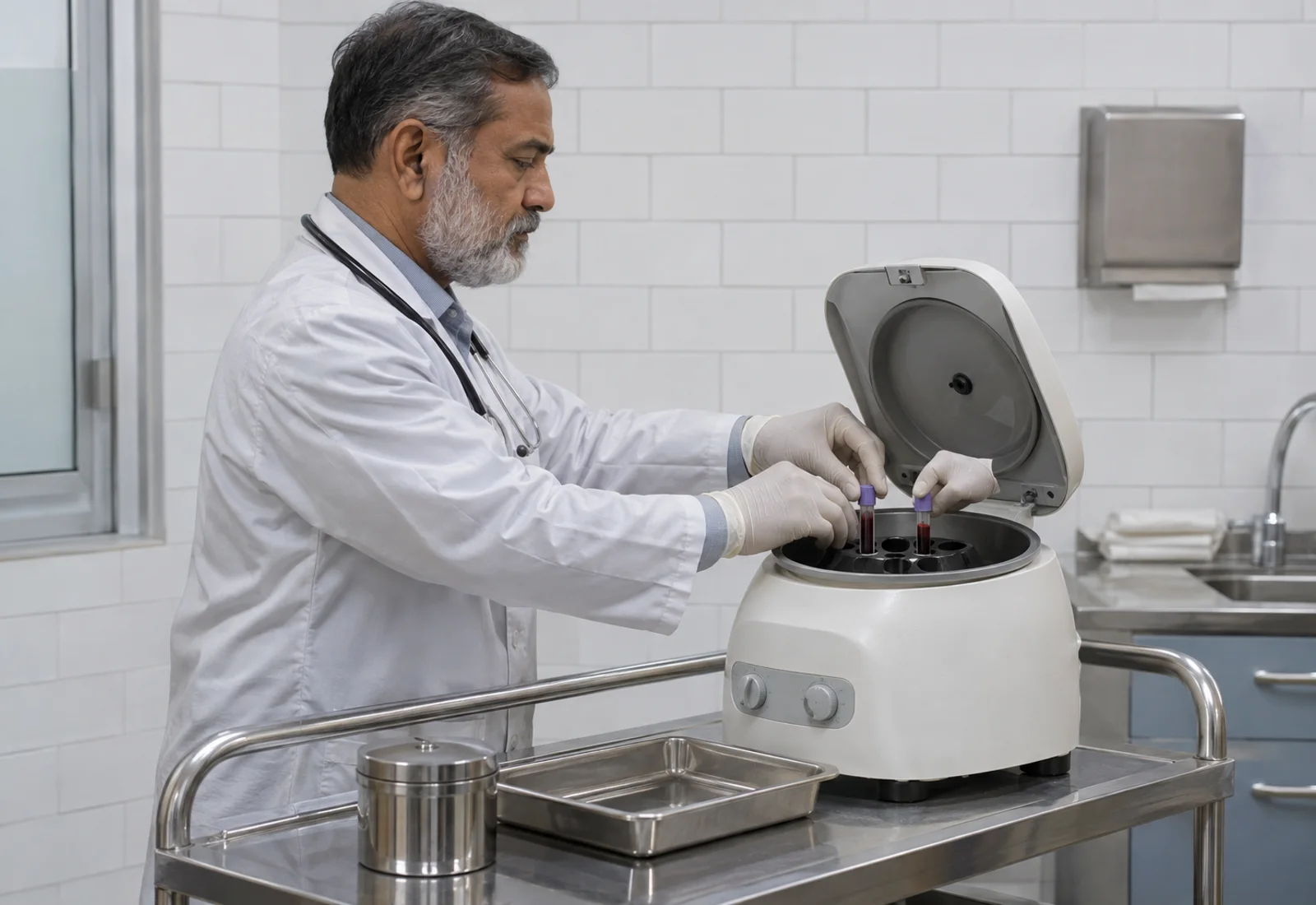
Healthline describes PRP as a substance drawn from your blood and injected into your scalp that can purportedly help heal bodily tissues, including follicles from which your hairs grow. The word purportedly is Healthline's own, and it is a reminder to keep expectations measured.
Cleveland Clinic lays out a schedule: for hair loss, treatment includes one PRP treatment per month for three months, followed by one treatment every three months for a year, and then one treatment yearly. Count the visits in each phase and ask the provider to price each phase, because the plan runs for years rather than for a single appointment.
Cleveland Clinic also sets expectations on timing, stating that results take time, that it takes three months to see any improvement, and that you will see maximum improvement in one year. Paying for early sessions means waiting before you can judge them.
Questions by what they settle
What you are buying. What is PRP for hair loss? and How is PRP prepared from blood? cover the product. Who may benefit most from PRP hair treatment? asks whether it fits you.
How many visits. How many PRP hair sessions are typical? is the page to read next if the schedule above surprised you.
What it feels like and what follows. Does PRP hair treatment hurt? and PRP hair restoration side effects: what to expect? cover comfort and risk.
Outside references include Healthline's guide to PRP for hair loss, MedlinePlus's hair loss page and Cleveland Clinic's PRP therapy page. For a clinical review, there is the Journal of Drugs in Dermatology article on platelet-rich plasma across the spectrum of alopecias.
The total to have itemized
Ask for the cost of the full schedule written out phase by phase: the monthly start, the quarterly year and the yearly upkeep. That one itemized total is the number to compare between providers.